Home / Services / Maintenance & Repairs

10 — HOME IMPROVEMENTS & PROPERTY MAINTENANCE

When something in the house
isn't working properly.

Repairs, ongoing maintenance and smaller home improvements for homeowners across Melbourne and surrounding suburbs. Cracked tiles, tired grout, damaged plaster, flaking paint: the jobs that are too small for a full renovation but too annoying to keep living with.

TYPICAL JOBS

—  Re-grouting and resealing
—  Replacing cracked or loose tiles
—  Patching damaged plaster
—  Surface repairs and repainting
—  Smaller home improvements

HOW IT STARTS

Text me a photo of the problem. Where it’s useful, I’ll arrange a free site visit to look at it properly and give you a free quote. You deal directly with me the whole way through.

NOT OFFERED

Emergency or 24-hour call-outs. Licensed plumbing and electrical work, which I coordinate with appropriately licensed tradespeople.

LAYER 01 — SURFACE

Small faults,
looked at properly

Most of the repairs I see aren’t complicated. What matters is checking why the fault appeared before covering it up.

GROUT

Grout that's cracked, crumbling or stained

Old grout is raked out to a consistent depth, the joints are cleaned and new grout goes in. If the grout keeps failing in the same spot, I check whether the tiles underneath have moved.

TILES

Tiles that sound hollow, lift or crack

A single broken tile can usually be cut out and replaced. A run of hollow tiles points to a bed or substrate problem, and that changes the job. More on this on the tiling page.

WALLS

Dents, holes and cracks in plaster

Patches are cut back to sound material, set in layers and sanded flat so they disappear under paint. Larger damage may need new sheet, covered under plasterboard and plastering.

FINISH

Paint that flakes, bubbles or patches

Loose paint is scraped back, edges are feathered and the surface is primed before repainting. Bigger rooms or exteriors are covered on the painting page.

LAYER 02 — SUBSTRATE

Fix the cause,
not just the look

Over about 15 years of hands-on residential work, I’ve learnt that proper preparation is often more important than rushing to a finished appearance. A patch over a damp wall or fresh grout over a moving tile looks fine for a while, then the same fault comes back.

So I’ll tell you what I think needs doing, why I’d recommend that approach and what limitations might affect the repair. Sometimes a small fix is all you need. Sometimes it’s worth knowing a bigger job is coming.

The right repair method, materials and scope depend on the property’s existing condition and the results of an on-site assessment.

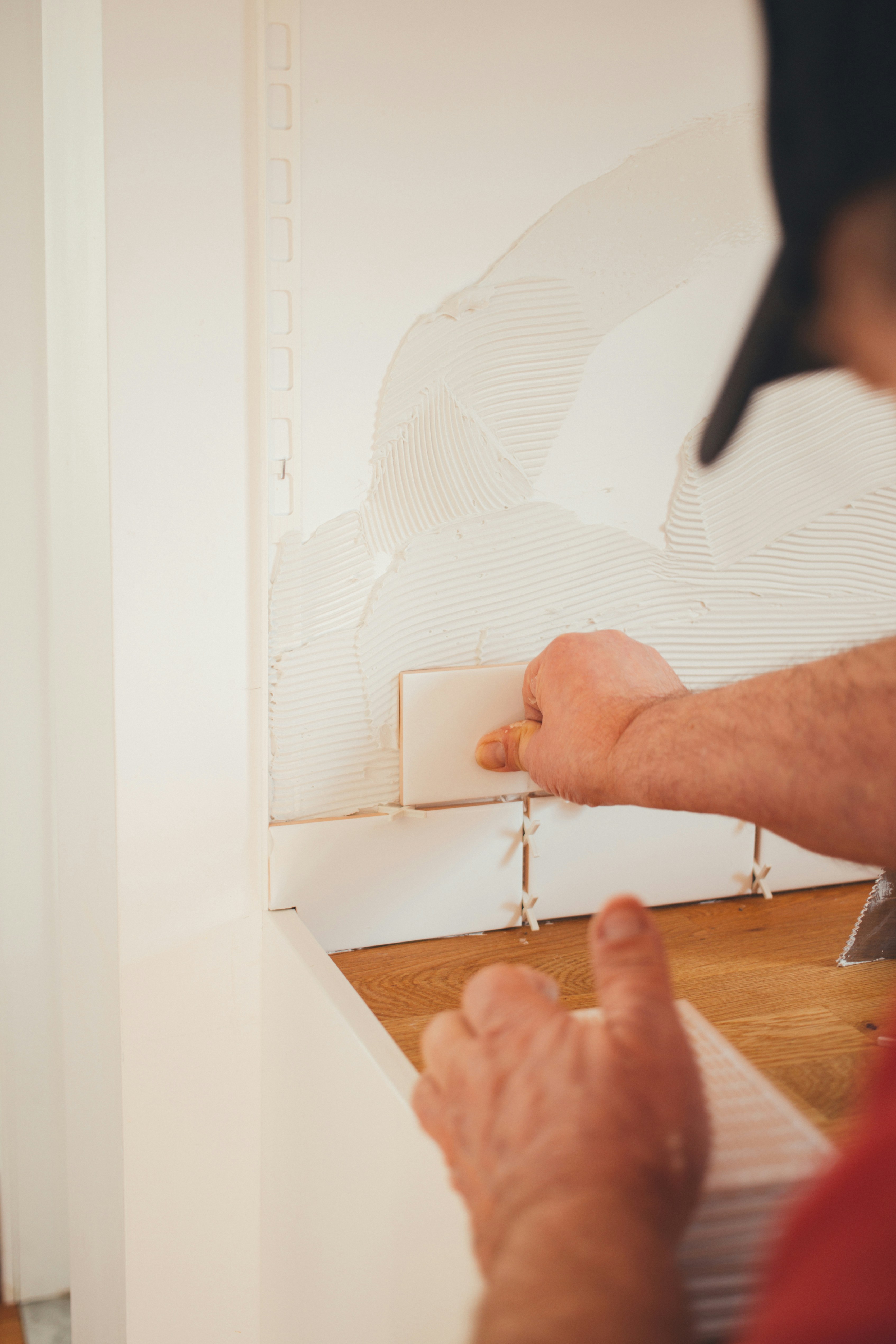
A worker is pressing a rectangular wall tile into freshly applied adhesive, with additional white tiles installed along the lower wall.

LAYER 03 — PLANNED WORK

Planned repairs,
not emergency call-outs

I don’t offer emergency or 24-hour call-outs, and I don’t promise same-day attendance. Maintenance work is booked after we’ve talked through the job, so I can arrive with the right materials and enough time to do it properly.

If the problem involves a burst pipe, an active leak or anything electrical, call a licensed plumber or electrician first. Once it’s safe, I can repair the tiling, plaster and paint around it, and on larger jobs I coordinate licensed trades myself. Who handles plumbing and electrical work?

Before you
send a photo

A few clear pictures usually tell me whether a free site visit is the next step. I’m available 9am–5pm, seven days, across Melbourne and surrounding suburbs.

01   One wide shot showing the whole wall, floor or room
02   A close-up of the damage itself, in good light
03   Any signs of water, staining or mould nearby
04   A rough idea of the size of the area
05   Your suburb, and how long the problem has been there
More detail in What to Photograph When Asking for a Quote. Quotes are based on the agreed scope and the conditions reasonably identifiable during inspection.