06 — PLASTERBOARD INSTALLATION & PLASTERING
A flat wall is
decided before
the top coat.
Plasterboard installation, setting, patching and paint-ready preparation for homeowners across Melbourne and surrounding suburbs. After about 15 years of hands-on residential work, I’ve found that most visible problems in a painted wall begin in the layers underneath it. You deal directly with me from the free site visit onwards.
01 — SUBSTRATE
Fixing the sheets
to a straight frame.
Before a sheet goes up, I check the framing behind it. Bowed studs or uneven noggings show through as waves once light hits the finished wall, and no amount of compound hides them properly. Sheets are laid out to keep joints away from openings where possible, and fixings are set just below the surface without breaking the paper face.
02 — BED
Setting the joints
one coat at a time.
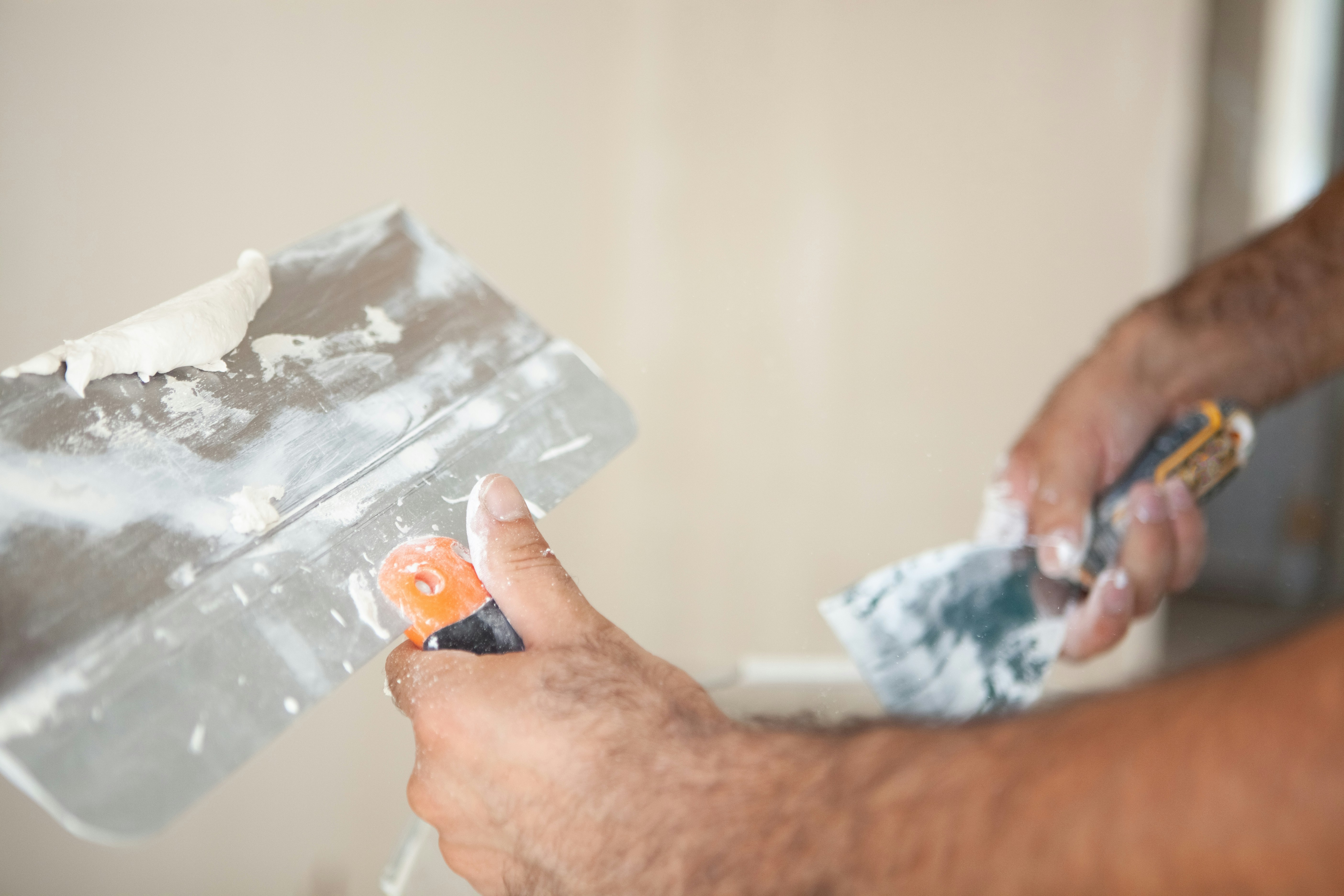
Joints are taped and bedded, then built up in thin coats, with drying time between each. Rushing this stage is the most common reason joints crack, shrink or show a ridge later. Internal corners, external angles and fixing heads all get the same patient treatment before any sanding begins.
03 — REPAIR
Patching holes, cracks
and tired ceilings.
Not every job needs new sheets. Many walls only need damaged sections cut back, patched and blended into the surrounding surface. I’ll explain whether a repair is likely to last or whether replacing a section makes more sense, and why. If a crack points to movement or moisture, that cause needs looking at before it is covered over.
04 — SURFACE
Leaving a surface
that's ready for paint.
WHAT SITS BEHIND THE SHEET
Plastering is one layer.
Some work comes before it.
Walls and ceilings often hide pipes, cabling and services. Where licensed plumbing or electrical work is needed before sheeting, I coordinate it with appropriately licensed tradespeople. I don’t carry out that work myself. Structural alterations and engineering are outside my scope and should be handled by suitably qualified specialists.
05 — ASSESSMENT
Start with a few photos
of the wall or ceiling.
The right method, materials and scope depend on the existing condition of your property and the results of an on-site assessment. Quotes are based on the agreed scope and the conditions reasonably identifiable during inspection.